He goes by Chudjak, or simply chud, he is the newest iteration of the poorly drawn character on MS Paint kind of meme.

According to know your meme, the meme was born around 2019 under the name “le polak” or “le /pol/face” it was a caricature of the stereotypical user of the /pol board on 4chan : a chronically online incel deep into the alt-right pipeline saying things like “the west has fallen”.

If le polak was clearly something made by the left to mock the right, a kind of counter attack to the soyjak meme, the status of chudjak is very different now. Despite its origin, chud has been adopted back by the right and has been transformed from a character that is used for mockery to a character you’re supposed to self-identify with. Yet, even if chud isn’t the dumb guy with horrible opinions you’re supposed to laugh at anymore it isn’t either a representation of the cool guy you should agree with, contrary to chad in this kind of chad vs crying soyjak templates :

Chudjak is much more similar to the wojak : it’s the vessel through which you’re supposed to relate to the meme, but contrary to the wojak chudjak isn’t an empty vessel, it already comes pre-loaded with a set of affects. Where the classic wojak can be anyone, chudjak is defined by a specific posture toward the world. The belief system of chudjak as a character is typically right-wing but it’s often very hard to pinpoint the level of irony a chud meme operates on, thus the memes don’t appear to be openly politically motivated. Because it refuses to clarify whether it is endorsing or mocking the worldview it presents, the meme can circulate well in any spaces, left wing, right wing or apolitical.
More than a political stance, chudjak captures a specific emotional orientation. The chud memes are often associated with the motto “nothing ever happens” which must be understood as follows : whatever the political change, the catastrophes or the global events, nothing of significance will change.
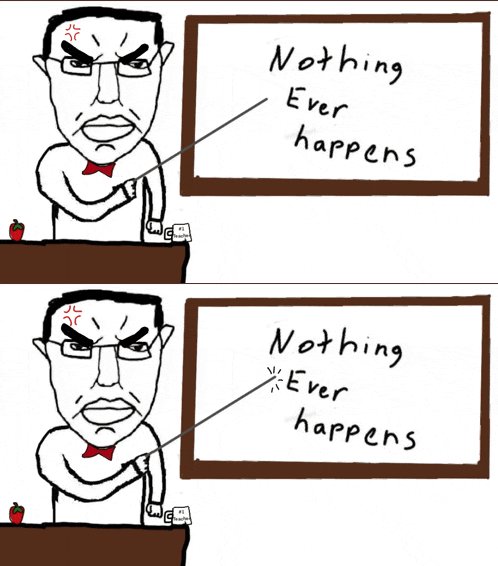
This affective core explains why chudjak feels immediately relatable even outside explicitly political spaces. The chud point of view is radically individualistic, but not in the triumphant, entrepreneurial sense promoted by neoliberal ideology. It is an individualism of withdrawal: nothing I do matters, nothing anyone does matters, so why bother? The world is experienced as something that happens elsewhere, at a scale so vast that personal action becomes meaningless. This produces a specific feeling of helplessness that is easy to recognize, especially for people whose lives feel stuck in low-agency situations.
This kind of outlook can function as a gateway to the right, even when it does not present itself as ideological. By promoting indifference toward others and skepticism toward collective action, chudjak memes subtly undermine the idea that social change is possible or even desirable. If “nothing ever happens,” then protests are pointless, organizing is naïve, and historical change is either an illusion or a scam. Modernity is flattened: past, present, and future blur together into an eternal now where nothing fundamentally new can emerge. The specificity of our moment, climate crisis, platform capitalism, collapsing institutions, is denied in favor of a cynical continuity.
Yet what chud often fails to recognize is that this very inability to imagine change is itself a symptom of oppression. As Mark Fisher describes with the concept of capitalist realism, capitalism’s most powerful move is not economic but imaginative: the foreclosure of alternative futures. Chudjak embodies this perfectly. He does not enthusiastically defend capitalism, but he cannot envision anything beyond it.
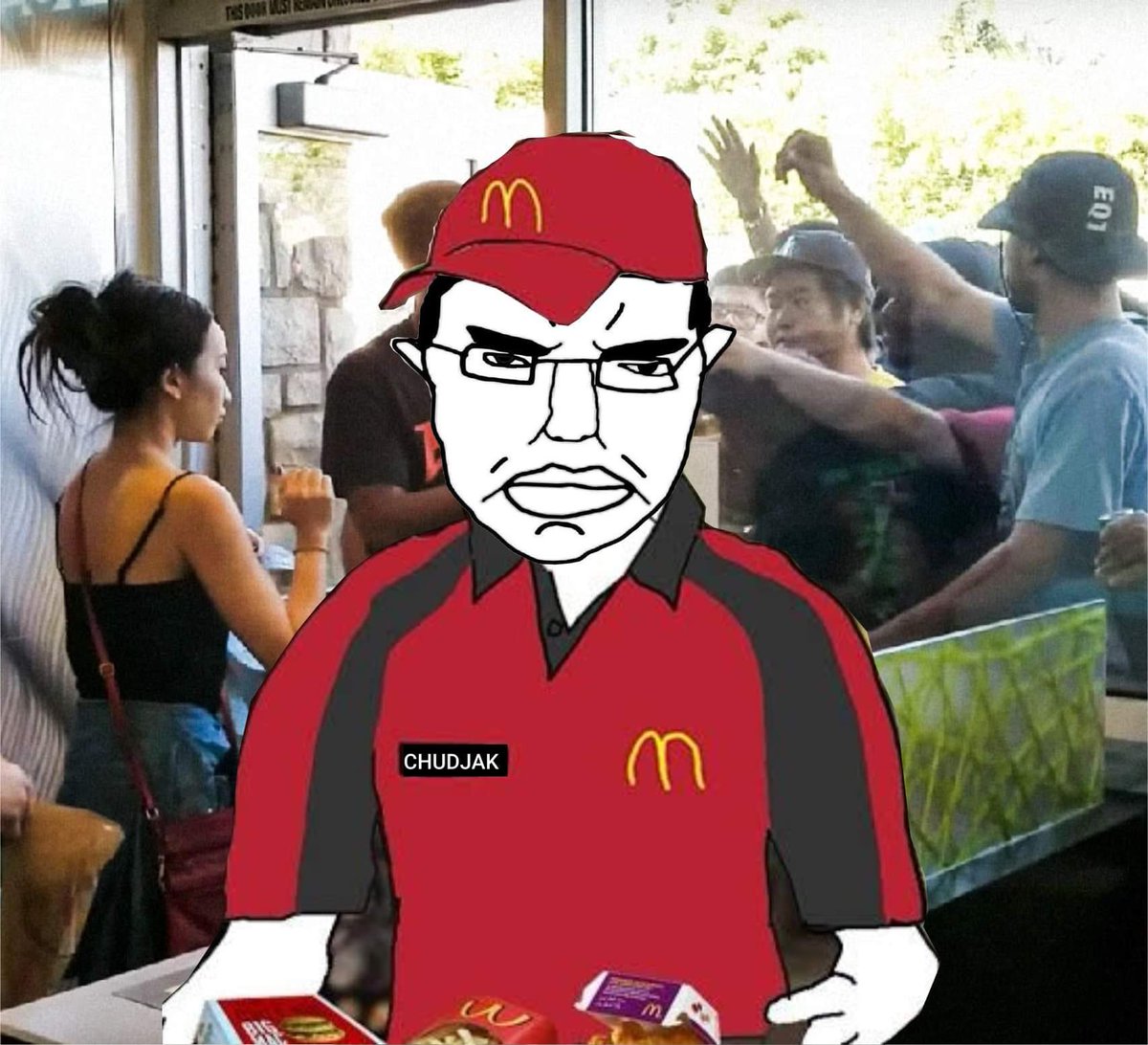
This is why chud is so often depicted in situations of extreme powerlessness: working at McDonald’s, living at his parents’ house, trapped in a loop of low-wage labor and delayed adulthood. The “you don’t understand, 24 (or any other age) is young” meme template captures this suspended state particularly well. Chud’s life has not collapsed spectacularly; it has simply failed to begin. He possesses just enough awareness to know something is wrong, but not enough agency or collective horizon to change it.

Paradoxically, while chud is convinced that nothing will ever happen, he is also waiting obsessively for a “happening.” But this happening is not political reform or social progress. It is something external and catastrophic, something that would interrupt the routine of work and obligation. A civil war, an economic collapse, a global catastrophe, even the apocalypse itself: anything that would mean not having to go to work the next day. In this sense, chud is not apathetic but exhausted. He wants rupture, not because he believes in a better world, but because he wants an end to this one.
This apocalyptic desire reveals the final contradiction of the chudjak figure. He claims indifference, yet he waits. He insists nothing matters, yet he watches closely for signs that everything might suddenly matter all at once. The meme oscillates between boredom and anticipation, nihilism and hope, without ever resolving the tension. Chud cannot act, cannot believe, cannot imagine but he can wait. And so the meme loops endlessly, just like the life it depicts: nothing ever happens, until maybe, one day, something finally will.